| |
| Wednesday, 18 November 2026 |
| The Bayeux Tapestry (on show at the British Museum, Sep 26-July 27) |
| Imogen Corrigan |
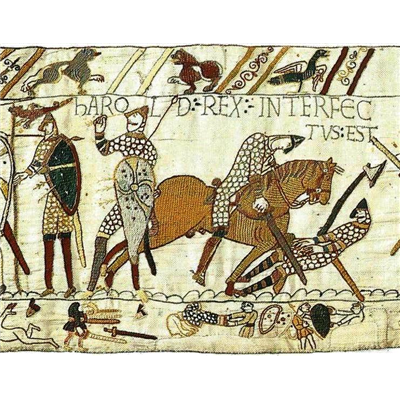 |
2.00pm to 3.30pm Ludlow Assembly Rooms There is far more to be discovered about the Bayeux Tapestry than could ever be covered in one lecture. Who made it, where and why are the most frequently asked questions – although they might also be seen as less important beside the information the tapestry itself offers us. It is not just a narrative of the most famous battle in English history, but also of the build-up to it. It is a moral story showing that good cannot come to those who break their word. It is a story of kings, chivalry and ambition. Intriguingly, many crucial events are omitted and we can only speculate as to why. The tapestry itself is made using only 10 different colours on linen but remains as vibrant today as it must have been 900 years ago. The lecture looks at many of the scenes in detail and explores what might be learned from this depiction of a turning point in our history. After nearly 20 years in the British army, Imogen studied Anglo-Saxon & Medieval History and Art at the University of Kent, followed by an MPhil from the University of Birmingham. She works as a freelance lecturer across Britain and Europe as well as lecturing on small cruise ships and running study tours and courses on land. Imogen, has written Stone on Stone: the Men Who Built the Cathedrals, published 2019. |
|
| Wednesday, 20 January 2027 |
| Dwellings for the Gods: The Art & Architecture of the Ancient Greek Temple |
| James Renshaw |
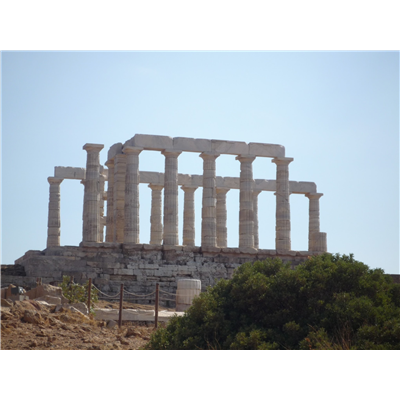 |
2.00pm to 3.30pm Ludlow Assembly Rooms We have all seen images of those stunning temples of ancient Greece. In contrast to a modern place of worship, the ancient Greeks believed that their temples were places where their gods came to dwell, and so literally wanted to make them worthy of the gods. This talk examines the art and architecture of the ancient Greek temple: how did the design emerge as it did? What is the significance of Doric, Ionic, and Corinthian columns? What can we learn from the sculpted art on them? How were these buildings actually used? We will look at the temple of Zeus at Olympia as a worked example, and finish by examining the legacy of Greek temple design in neo-classical and modern architecture. Following a degree in Classics from Oxford University, James has taught Classics at secondary school level since 1998 and currently teaches at Godolphin and Latymer in London; here he runs the school’s Ancient World Breakfast Club, which has an ethos similar to that of The Arts Society. Since 1998, James has published a number of textbooks related to the classical world, including In Search of the Greeks and In Search of the Romans. He lectures at the V&A Academy, most recently on their Classical World and its Afterlife and Classicism from the Ancients to the Renaissance courses. A keen traveller James is able to use his own photos of ancient sites in his lectures and books. |
|
| Wednesday, 17 February 2027 |
| Jan Van Eyck (to Coincide with National Gallery Exhibition) |
| Mariska Beekenkamp-Wladimiroff |
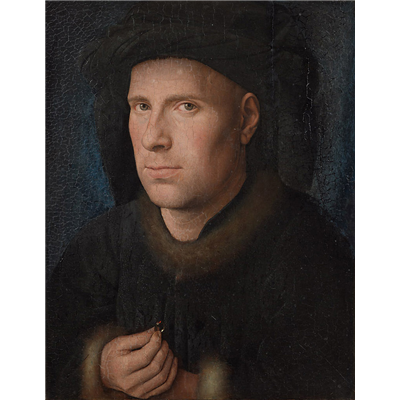 |
2.00pm to 3.30pm Ludlow Assembly Rooms To accompany the National Gallery’s van Eyck’s Portraits exhibition (Nov 26-April 27). Famed for inventing oil paint (although we now know this not to be true) Jan van Eyck used this medium to his advantage when making his minutely decorated paintings. Jan van Eyck worked in Flanders, part of modern day Belgium, at a time of great artistic advances called the Northern Renaissance. Inspired by local Gothic traditions and illuminated manuscripts, his paintings are filled by the most delightful details. Often not even visible to onlooker’s eyes, one wonders if he painted some for his own enjoyment. Join Mariska for this journey looking at some of the most wonderful works by Jan van Eyck and his extraordinary eye for life’s details. Mariska has a BA and MA in Art History, majoring in The Dutch Baroque Arts from the 17th century at the Courtauld Institute. She started as a College Lecturer, but soon started her own company - Art Historical London offering art historical lectures, museum visits, courses, tours, travel and events from Amsterdam, London and New York, and online. She teaches on the public program of the Dulwich Picture Gallery and for a number of institutions in the Netherlands, Australia and the USA. |
|
| Wednesday, 17 March 2027 |
| Graveyards to Die for: How Nineteenth Century London Buried Its Dead |
| Charlie Forman |
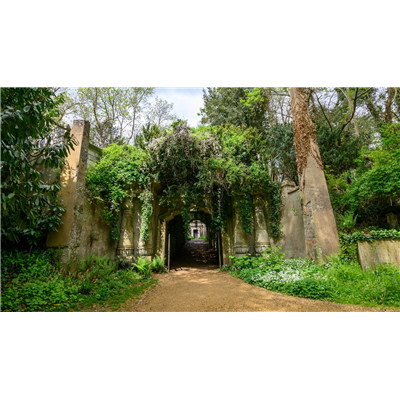 |
2.00pm to 3.30pm Ludlow Assembly Rooms Dig into the graveyards of 19th century London. As London’s population doubled in its early decades, so did the numbers dying. Where to bury them? The deep attachment to burial in parish churchyards waned as layers of coffins raised ground levels high above the street while backlogs of the unburied became a rat’s delight. Churches acquired extra land. The lecture covers recent excavations which reveal how this plan did not relieve the pressure for long, with families designing tombs to thwart the bodysnatching ‘Resurrection Men’. Scandal broke out over a chapel with thousands of rotting bodies discovered in its crypt, just as the Magnificent Seven garden cemeteries were beginning to flower outside the city limits. They were – and still are - places of landscaped beauty, of tranquil reflection for the living as well as gardens holding spectacular monuments to the dead. The lecture ends with the legacy - the railway stations taking corteges to funerals in rural settings, an underappreciated Jewish burial ground, the municipal cemeteries and pocket parks of today. As a London walking tour guide and lecturer, Charlie highlights the social, architectural and artistic history of his home city – a city whose historic core is larger and richer than any other world city. His talks focus on the forces that have shaped and changed this multi-faceted metropolis and the artistic and cultural heritage that this has given us. Charlie’s publications include Spitalfields: A battle for land. |
|
| Wednesday, 21 April 2027 |
| The Eccentric World of Agatha Christie on Film & TV |
| Benedict Morrison |
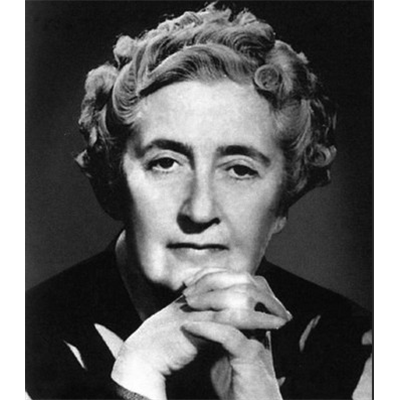 |
2.00pm to 3.30pm Ludlow Assembly Rooms Agatha Christie is one of the most adapted writers of all time. These adaptations, however, have often been critiqued as nothing more than gentle exercises in period nostalgia. If this is the case, it raises the question of why have they attracted some of the most brilliant actors to star in them. This talk goes on a trip through decades of Christie adaptation, exploring how the performances of John Gielgud, Maggie Smith, Albert Finney, Angela Lansbury, Charles Laughton, and Peter Ustinov (to name but a few) help to express the uniquely eccentric world of Christie’s work. Following his excellent lecture to us (2023) on post-war film, Benedict Morrison returns to talk about Agatha Christie. A lecturer in Literature and Film at the University of Exeter, he has published books on Art Cinema and post-war British comedy films. Having spent seven years studying at the University of Oxford, he finally traded the dreaming spires for the cultural bustle of London. He loves nothing more than settling down in the darkness of a cinema to enjoy a great film. |
|
| Wednesday, 19 May 2027 |
| “Sugar Loaves and Ant Hills”: The Architecture of Antoní Gaudí |
| Justin Reay |
 |
2.00pm to 3.30pm Ludlow Assembly Rooms Antoní Gaudí i Cornet (1852 - 1926) was a Catalan architect and decorative designer, widely considered to be the greatest exponent of Catalan Modernisme. Gaudí's works, mostly located in Barcelona, include an icon of modern architecture, the Basilica of the Sagrada Família, and several private and public buildings and open spaces with an original, imaginative and provocative approach. Gaudí's work was influenced by a passion for nature and a deep religious belief, and also a respect for the traditional culture of Catalunya. His buildings are highly decorated, detailed and colourful, employing local crafts such as ceramics, stained glass, wrought ironwork, and joinery. He introduced new ways of using ancient techniques in materials, such as trencadís in which waste ceramic pieces create abstract mosaics emulating patterns found in nature. Gaudí’s designs transcended mainstream Modernism to present an apparently undisciplined world of fantasy and symbolism. His idiosyncratic methods, while producing outstanding structures, caused problems for his builders, notably at the Sagrada Família, the tallest church in the world, which is still not complete 144 years after the first stone was laid. Gaudí rarely drew detailed plans, preferring to create three-dimensional scale models, adding details as his imagination conceived them. He also invented solutions to architectural problems which are used by architects today. In this talk Justin describes the cultural environment in which Gaudí lived and worked, and discusses his interior and exterior designs for some of the world’s most delightful and intriguing buildings and spaces. After officer service in the Royal Navy and a long business career, Justin Reay (LinkedIn) studied History of Art and Architecture at and Islamic art at Oxford and then classical culture with the university of Athens. He was invited to join the Bodleian Library as a senior academic manager, advising researchers and graduate students and editing manuscripts in the Bodleian's collections. He is a published historian, qualified teacher and tutor in History of Art and Architecture and classical studies for independent colleges at Oxford and for private graduate students. He is a member of the AI & Arts Interest Group at the Alan Turing Institute, and is currently writing a university preparation course on the history of innovation and the impact of Artificial Intelligence on human creativity. Image Creative Commons License |
|
| Wednesday, 16 June 2027 |
| Power in the Folds of a Gown: Elisabeth Vigée le Brun & Angelica Kaufmann and the Power of Fashion in 18th Century Portraiture |
| Franny Moyle |
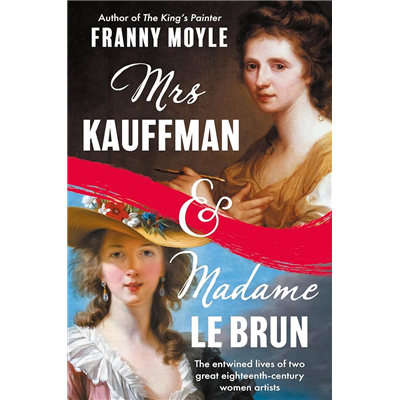 |
2.00pm to 3.30pm Ludlow Assembly Rooms Franny explores how painters Vigée Le Brun and Kauffman used sartorial signalling to communicate an emerging proto-feminist moment in the last quarter of the eighteenth century. Both taste-makers and women setting fashion rather than following it, between them they created a gallery of portraits of strong, forward thinking, influential women wearing adventurous clothing. Analysing these stunning works, Moyle invites us to reassess them through the lens of the women who painted them. Television producer turned author, lecturer and curator, Franny Moyle (Wikipedia, Instagram, X) has been called “one of the most gifted living writers of artistic biography”. In 2009, Desperate Romantics, her serial biography of the Pre-Raphaelite Brotherhood, was dramatized for BBC2. She subsequently delivered acclaimed biographies of J M W Turner and Hans Holbein the Younger. Her Biography of Turner was described as 'compelling' by The Economist, 'immaculate' by The Times, and ' exemplary' and 'enthralling' by The Sunday Times. Meanwhile, The King's Painter - her account of the life and times of Holbein the Younger - was a Radio 4 Book of the Week in 2021. In 2022 Between the Sheets, her revelatory exhibition of Turner’s erotica, drew national attention. Her account of eighteenth-century painters Angelica Kauffman and Élisabeth Louise Vigée Le Brun is published in 2025. Franny has appeared in her capacity as an art historian on TV and is a regular contributor to radio. She is a trustee of Turner’s House in Twickenham, and a Fellow of the Royal Literary Fund. |
|